Let me share with you some secrets, my friend—lessons that may guide you in your journey toward understanding.
Learning and the Mind Firstly, learning itself is not hard. What makes it difficult is finding the connection between what you already know, what you wish to know, and the new knowledge you must acquire. The real challenge lies in your attachments. If you approach learning with the humility of knowing nothing—if you can empty your mind—new ideas will form themselves naturally.
You do not fail to learn because you are unintelligent. Often, you fail because you are too attached to certain ideas. As Carl Jung observed, you may even be possessed by those ideas, instinctively gravitating toward people and paths that reinforce your beliefs while resenting those that challenge them. This instinctive justification of what you already know can be a barrier to true learning, my friend.
The Trap of Knowledge Secondly, it is common for those who recognize past mistakes to believe they are exempt from repeating them. This is the ultimate mistake. It is easy to know what to do after many failed attempts, after observing errors committed by others or by oneself. However, the danger lies in assuming that this new knowledge makes you infallible.
The greatest folly is to think that what you know now is final, that you are beyond error. Remember, those who made mistakes in the past also believed their knowledge to be complete. To think of yourself as unfalsifiable is to invite disaster. Stay humble, my friend, for the belief in your invulnerability is the surest path to failure.
On Success and Failure Finally, there is a tendency in those born under favorable circumstances—or in those who succeed easily—to believe themselves special. Such people often look down on others who struggle, wondering why they cannot achieve the same results. But if you stood on the other side of the river, you might curse fate or attribute your failures to external forces.
Man creates explanations for his successes and failures, often in ways that protect his ego. Especially for his failures. Rarely does a person have the clarity—or the courage—to see their own mistakes. And you, my dear friend, are no exception.
Takeaway I want you to be formless, like water. Be open-minded, for this is what attracts true knowledge. Always keep in mind that the man of the future will one day discover a new technology and wonder how the man of today failed to see something so simple.
We laugh at the mistakes of those who came before us, pointing fingers at their folly, yet we fail to examine our own actions with the same scrutiny. When people in the past made mistakes, they thought they were doing the right thing. Whatever you do, my friend, give room for the possibility that you may be wrong.
With this mindset, you will not only learn but grow. And in your growth, you may avoid the arrogance that blinds so many.
The true journey begins with no map. It is in the course of the journey that the map is made. A perfect map will always be the derivative of a great immersion into the journey.
I don’t underestimate the fact that one needs to have a purpose and a path in live. However, I want you to have this is mind: The world became too small for you to have one thing to live for. Having a definite live purpose is assuming that the world will remain the same for forever. It is assuming that nothing will change or that the change will not be too consequential to affect your chosen path.
But how certain are you about the fact that things will not change tomorrow. Things move fast. Before you realize it, the success or the skill you had yesterday will be obsolete and somebody else has already replaced you.
For this reason, I want you to be immune to changes. Make Yourself the paragon of change. You must be change itself. Always have it by the back of your mind that who you are and all what you’ve built will become obsolete one day. Prepare yourself for the worse possible case scénario. Make it a way of living. Flexibility, adaptability should be your way of life. Live now as if you are about to die the next second. Follow your goals as long as they are still valide but keep at the back of your mind that they will become obsolete one day. The path you are following now might become obsolete tomorrow. Fight for what you want but be ready to lose. Learn to die.
You know you are possess by the moment you see them in your dreams. They came to me this night and took what they will usually take in real life. I got very soft, thinking that I am about to win the battle, thinking that I won the battle already, but the truth is, they occupy the most strategic part of me, my mind. I see them waiting for the smallest moment of inatention to get my soul. The slightest moment, and they will enter in rage, making sure that I am completely broken.
To lack courage is to refuse to confront your weaknesses. But before you can confront them, you must first admit that they exist. Among your weaknesses, two stand out: your lack of focus and your unreserved niceties.
You are not burdened with the responsibility of changing the world, but it is your duty not to make it worse. This obligates you to better yourself every single day. Neglecting to maximize your potential is not just a sin against yourself—it is a sin against the world. For you are part of it, just as it is part of you.
Ask yourself this: When have you truly taken a risk? When have you made sacrifices? When were you brave enough to act with honor? Without risk and sacrifice, you cannot become the person you are meant to be. But heed this warning: take only calculated risks and make thoughtful sacrifices. Know your goals, and take risks with purpose, sacrificing wisely to achieve them.
Finally, and perhaps most importantly, you must learn how to lose—despite all the risks you take and the sacrifices you make. Any return from risk or sacrifice is a surplus, a gift. From the very beginning, you are indebted to life.
You are worth the amount of losses you can withstand without corrupting your character. When all is lost, it is your ability to remain master of yourself that preserves your sense of pride. To master oneself is the ultimate proof of character.
Better yourself every day, but never at the expense of violating the core of who you are. It is one thing to improve; it is another to remain true to yourself amidst the chaos of failure and the allure of shortcuts.
Words don’t matter that much my friend. Actions do. Be skeptical about what a person tells you he/she believes. Be empirical by looking at what she/he does. It is clear that words can just be dreams, wishes or what people aspire to be but only actions can prove who a person is. Despite all your good words, all your sayings, only your actions show your true nature. How many times my friend have you said you will do X or Y just to start and never finish. The world, including me your judge, do not care about what you say you will do, all what we want to see is what you do. Stop talking, just do.
Any body can say he or she is religious, but again only what people do prove to us whether they are religious or not. Ask the devil if he believes in God and he will say yes. In fact he will articulate every possible reasons for his believe in God. However, ask him to prove, or put him in a situation where he is to prove that he believe, then, will you see his true color. Don’t ask too much, in fact don’t ask at all, just observe what people do and from there you will be able to say who they are.
No matter what you may say about your humanness, the first and most important thing to have in mind is that you are flawed. Deeply flawed. Only through your actions can you prove that you moved away from your beast. Remark that the difference between man and other animals is that man finds it necessary to prove he is different form other animals through words. But, as I said, words remain words, only actions do count.
The most painful thing about a new idea coming across the mind, is the fact that the mind has never thought about that. When you come across such a thing you may want to act defensively. Such an idea threatens your old ways of living. That frightens you to dead. You have to go through the pain of redefining everything; forming new boundaries; becoming a child; learning from scratch. All of this is terrifying. You surely do not want any of those things. It is preceded by a very painful fact: All your previous believes might be false. This is unbearable for an unprepared mind. A mind that has never been open to the notion of new possibilities will barely survive such new ideas.
We fear the unknown for in it might be hidden a painful truth.
But good God, it is soo hard, it is so painful and stressful to be in this position. I find myself constantly stressed and I hate this sensation. It’s as if my body wanted to be somewhere else: In another body, another place, another living condition. In addition to that, there is a terrible fear . I am terribly afraid to fail. I am terribly afraid not to be able to get things done. I am terribly afraid to confront people and to say what I think. I am terribly afraid of almost everything : to be alone, to write for my YouTube, to be send back to my country, to get addicted to something way more above any hope of getting out, to live a life of misery with no movement forward. I am afraid of everyone and of everything. I am afraid to register for that certificate. I am afraid of failure so I don’t even start. I am afraid of almost everything, everybody, and sometimes to live.
Stress is like your body screaming and burning to be out of your body. To be somewhere unheard of. To be somewhere save of any type of threat. But no such place exists. So I must remain here stress and afraid like never before. And to counter this I give myself to all sorts of addictions.
I am stressed and afraid. And in all this I find myself terribly alone. I wish I had somebody to help me with this problems. I wish I had somebody at my side. But fuck I am even afraid to share my fear with other people. That was the role I wanted this girl to play in my life. But I have no wright to put her in a position she doesn’t want to be. I have no right to convince her of what she is not or does not want in her life. It is up to her to decide on whether or not she wants me in her life. That was selfish and the fun part is that I did not even realize that I was doing that. All I have to do is concentrate on the next move. By being stressed I somehow put other people into my own stress. This is what I deed with her, and it failed me terribly luckily for both of us.
You have to admit it young man: You became terribly afraid. The funny thing is that you are afraid of anything. Just an idea will make you shiver. Yet you claim that such are the things you want to achieve. Young man, have in mind that no one will do it for you. Is it hard? Nobody said It was going to be easy man. Finish weeping; yeah, you’ve got the right to weep. Then get up and move back to work. You are alone? Who said people were going to be with you all along. Is it too painful? Who said it was going to be agreeable all along. You chose it, so face it. This is how life has always been, there is no turning around.
When I was a child, I never understood why adults got mad at everything. And ever since I became an adult I can’t stop wondering why I never got too attached to certain things when I was a child. I wondered by then why adults were interested at certain things, and when I became an adult, I wondered why I never desired certain things for too long when I was a child.
You constantly have to remind your mind that you are not in the Savanna. When you will reach that level, you will be able to solve your problems.
This fear makes me paranoid, incapable of taking any major decision, I move and come back on my decisions. And that causes more fear: What if I take the wrong decision? But fuck that. I just have to do it. When I spend too much time before taking a decision, time makes the decision for me and it is almost always what I don’t want.
Where does it come from? Why do you feel it so intensely? What are you afraid of? Facing the reality of your situation? Confronting your family and friends? The pity in the eyes of those who look at you? Or perhaps the fear that you are not good enough to succeed?
It torments you. But to overcome it, you must ask yourself: What are you willing to die for? What would make you transcend your fear? That is the ultimate question.
Only those who have something to lose feel fear. Fear is written on the face of those who possess something precious—something they might not even recognize, something they cannot define. If you own nothing, you have nothing to lose, and fear disappears. Only then can you claim true freedom.
But do not misunderstand the words, for there is possession and possession.
When I say that those who possess feel fear, I speak of those who are possessed by what they own. Those enslaved by their belongings, their status, their illusions. And when I speak of freedom without possession, I also refer to those who own things—whether material or not—but who are ready to lose everything overnight.
Sadly, most of us belong to the first category. Myself included.
And notice: some may have nothing material yet still have something to lose. If they refuse to own anything, it is precisely because they already possess something invaluable. It could be the freedom of owning nothing. Whatever it may be, they are enslaved by that very “freedom.” Taking it from them would be their greatest suffering.
I repeat: the one who is afraid possesses something. And no matter what that something is, he is its prisoner.
She has not left you yet—not out of love, but out of fear. Fear of making a mistake. Fear of the unknown. Fear of finding someone worse than you. If you think about it, it is fear—not love—that keeps her tied to you. Do not confuse the two.
She will leave once that fear is gone. And that will be good for her. Perhaps for you as well.
It is the same for him. He would fight a lion for you—not necessarily out of love, but because he fears loneliness more than he fears the lion. He will be devoted to you, your slave. Whether you have lovers or not, he will stay, go to the ends of the earth for you—as long as that fear remains.
Then the world will call it passionate love, when in reality, it is just a man who, in his usual loneliness, saw your smile and convinced himself that you love him.
Fear is a deceptive feeling in many aspects of life. We often confuse it with courage or love. But many do things out of fear rather than out of bravery or love.
Fear can paralyze the fiercest of lions and give the weakest man the strength of Hercules.
Be careful not to mistake fear for courage or love.
How do we distinguish these feelings?
I still wonder—being the greatest coward of them all.
The Fear of the Group
Another disease: the fear of “what will they say?”
We do not want to be alone because we fear death. We twist the truth into lies just to belong, just to be loved.
To tell the truth or to be part of the group?
Lies are an addictive drug. We start believing they must always be this way. Lies feed on themselves. One lie always leads to another. And the more they grow, the more we fear they will one day be uncovered.
We fight against it, but alas, it is harder to confront than we think.
To defeat it, we must tell the truth, especially in the smallest things, where we fear punishment. It is little by little that we learn to conquer fear.
Fear
Fear of the future. Fear of others. Fear of life. Fear of death. Fear of adventure. Fear of loving. Fear of moving to Paris. Fear of the streets. Fear of making mistakes. Fear of telling the truth. Fear of saying, I don’t know. Fear of creditors, of unpaid bills, of failures and errors. Fear of the past and the future. Fear of everything. And above all, fear of living. Fear of loneliness. And finally, fear of oneself.
“To be fearless is the most terrifying thing of all.”
My Situation
Regarding my administrative situation, I am where I am simply because I do not have the level to study and work at the same time.
I wasted time watching videos. I wasted time fantasizing about being with Maya. I wasted time getting angry. I wasted time dwelling on what is wrong in my life. I wasted time trying to satisfy some relationships. I wasted time feeling guilty for missing calls.
Here is an insight:
Do things right the first time so you never have to justify why they weren’t done well.
Now, it would be even wiser to say no to anything that does not contribute to my intellectual growth.
I will submit my application as it is. If it is rejected, I will accept going to court to assert my rights and explain why I am no longer in a university. (I wrote this line in 2022, when I lost my visa and became an illegal immigrant in France)
(I am not in a French university mainly because I lack the academic level and also because I did not really connect with what was offered to me. I did not know what I wanted to do when I arrived. I did not know what would suit me. I initially wanted to study psychology, thinking it contained the philosophy that deeply fascinates me, but I also did not want to stray too far from pure sciences.)
Now that I know I need more than just that, I will keep working.
Again and again.
To be honest, I never truly gave up. I simply redefined the path I need to take.
What is in loneliness that makes it intolerable? What are we avoiding in it?
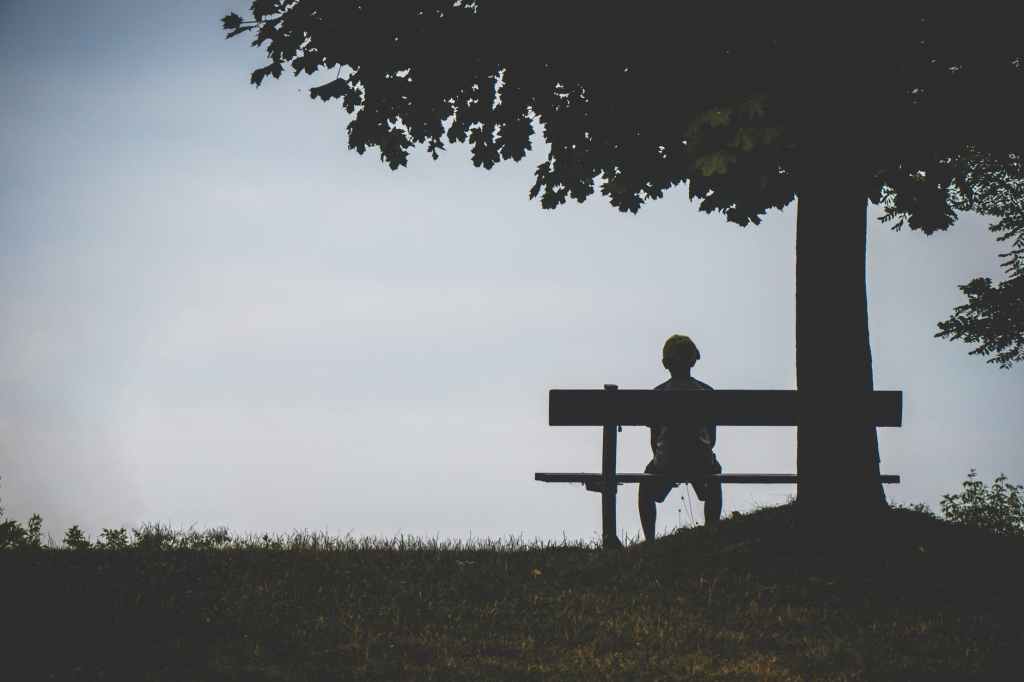
Pexel photo
I have been avoiding loneliness, it was like avoiding myself. The more I moved towards other people the lonelier I became for I gave no company to myself. And now that nobody but myself is left around, I find it hard to have a conversation with me. We’ve been away for so long that we now look like strangers to one another.
Now I understand why I wanted to have a friend to whom I could talk to. A fake one for that matter. It was because I was lonely. I felt It within me, this sensation of loneliness. It is when I was alone that I actually realized that never in life have I really known where to go. I have been following the trend, all those around me. I Never really sat down on my own to ask myself what is it that I could do? where is it that I could go? Loneliness test whether or not you have an identity of your own. I failed the test. All what I have done, all what I have been in the past was to fit in. The crowd was my food, their approval was my water , like a vampire feeding on blood, I lived to please the crowd.
When you have been feeding on people, when they have been your drug, their absence brings a great reality: YOU LOST YOURSELF ALONG THE WAY. It is really painful for a man not to know who he is. When he is left alone he will certainly not know where to go, another pain. Have no doubt about this: Solitude is a chamber in hell.
What is worse? Been alone, knowing where to go? Or been surrounded not knowing where to go?
Something that I have realized is that when I am surrounded it looks like I always know where to go because I will talk and listen to a bunch of people and share their ideas. Unconsciously. I am certainly going to move in the same direction they are moving. We tend to imagine that the final line of everything is the group, so we follow it . BUT HAVE I EVER BEEN WITH MYSELF? NO BOOK, NO PHONE, NOBODY, BUT ME.
NO. I have never been alone, and after realizing that I became more afraid of solitude. Another fact is that not been up to date with the group is another pain. For example not having the brand new iPhone like every friend is painful, or not been popular enough like most friend is painful. Even when we don’t want, we force ourself to be up to date. The most painful of all is having my own ideas.
We generally lie until lies are not bearable any more. It reaches a point where you only have two options: Transform the lie into a truth or face the lie, suffering the consequences of facing it. Sometimes been alone is a good way to test the level of truth within us. It drive us crazy when we’ve been fakers for too long.
What makes solitude so painful is that there is absolutely nobody, not even yourself. Consider yourself as the link between the future and the past. You are there standing in the middle of these two guys. You should not be on either side. That is, neither on the side of the past, nor on the side of the future, you should JUST BE THERE. BE THE LINK: THE MIDDLE MAN. The PRESENT MAN. If you move out of your position as the link, the past or the future or both, will create friction in the sense where you will either be thinking about the errs of the past or the opportunities of the future or both. Such life is very painful. We cannot tolerate been alone because we have used something other that our true self as the middle man. If you are alone and you don’t know where to go, go through the suffering of first finding your true self. If you are surrounded, always pay attention to those moments you are about to lie. This might be the only antidote to solitude. (I am not sure about it as I have not yet proven it; I still have difficulties been alone, so this is a hypothesis for myself that I am trying hard to prove, and it worked to an extent).
Dear reader I don’t understand what I just wrote in the paragraph above, it wrote itself.
Never forget this: Every human being is a social negotiator. We all negotiate to be part of a group or we negotiate for others to follow ours. Solitary wolves are rare nowadays.
NOTE: Solitude is different from isolation, for it implies you are completely cut from the outside world, while in solitude you may be surrounded. Well, this is how I see it.
If you really don’t know where you want to go start by writing down where you don’t want to go. But how do you know this if you didn’t try out new roads, new people, new concepts and ideas? That is the paradox of life. Yes you’ve got the point, we are asked to live but we are not told how to live. We figure out how to live by living. I am a 22 years old still looking for a way to live. My greatest improvement is finding that I need one.
Ladies and gentlemen, I still try to be a lone, and it is hard. So have in mind that I am the worse person to give you an advice on the subject, I can just tell you how I feel, what my hypothesis are and the experiment I am undertaking.
pexel photo
Thanks for reading me and please don’t forget to disagree and make suggestions.
*Comment fonctionne une dépendance (L’âme dépendante) **
Prologue
***Ici, nous voulons savoir ce qu’est la dépendance en général : comment tracer la ligne entre la consommation ou le comportement normal d’une substance et une dépendance ? ****
Ça a commencé par un essai. Par curiosité. Mais maintenant, nous sommes accros. Il nous tue lentement, chair et âme… C’est le maître et Nous sommes, mesdames et messieurs, ses esclaves.
Bienvenue sur Identity mesdames et messieurs, chapitre 3 : Comment fonctionnent les addictions ou l’âme dépendante, première partie : INTRODUCTION.
Avez-vous déjà fait le mal que vous ne vouliez pas faire, en promettant ensuite de ne plus jamais retomber dedans, Dieu seul connaît le nombre de fois ?
Vous êtes-vous déjà demandé :
Qu’est-ce qu’une addiction ?
Qu’est-ce qui fait de nous des êtres accros ?
Comment fonctionne une addiction ?
Quels sont les types spécifiques d’addiction et comment opèrent-elles en nous ?
Et enfin, comment pouvons-nous résoudre les problèmes d’addiction ?
Bon, rentrons dans le sujet….
Un petit avertissement :
Je tiens à préciser que je ne suis pas un expert en addiction. Alors, gardez à l’esprit que ce documentaire est extrêmement limité pour couvrir un sujet aussi vaste que celui de l’addiction. Je ne peux résumer en quelques minutes ce avec quoi les gens se débattent depuis des années. N’hésitez pas à me contacter à tout moment pour des suggestions sur la façon d’améliorer mon travail ou mes recherches sur le sujet. Comme vous, j’apprends. J’espère en apprendre plus de vous sur le sujet avec vous.
Cela étant dit, je voudrais que toutes les âmes perdues, qui luttent, se fessant d’innombrables promesses à elles-mêmes et à leurs bien-aimés ; à tous ces toxicomanes qui ont perdu espoir ; à ceux qui sont coincés dans la honte, la solitude, la dépression et les pensées suicidaires. A ceux dont la vie a été emportée par la dépendance, à nous tous, âme accros, je dédie cette article avec l’espoir de la paix, de l’amour, et surtout de la liberté.
Partie une
1 L’origine
Le terme addiction vient du mot latin « addicere » qui signifie attribuer à, donnant son sens traditionnel inoffensif d’activité habituel généralement à but positif. À l’époque de Shakespeare, c’était défini comme la chose passionnée que quelqu’un fait de tout son être. Ou selon d’autres sources, un addict, serait un mentoré, signant un engagement à suivre l’enseignement de son mentor. C’est pourtant dans l’empire romaine qu’un addict, « addictus » en latin, était considéré comme un individu, qui, ayant fait défaut sur une dette, était cédé à son créancier comme esclave. C’est de là que dérive la définition conventionnelle d’une addiction. En résumé, c’est une relation esclave-maître.
2 Alors, qu’est-ce qu’une addiction au XXIe siècle ?
Pour le dire simplement, une addiction est la pratique compulsive d’un comportement, malgré les conséquences négatives du comportement sur l’individu dépendant et sur son entourage.
Mais nous absorbons tous des substances ou nous livrons à une certaine forme d’activités, cela signifie-t-il que nous sommes tous accros à ces choses ? Bien sûr que non. Nous mangeons tous de la nourriture, mais nous n’en sommes pas tous dépendants. En passant, même des activités saines comme l’exercice physique peuvent devenir addictives
Alors Comment tracer la ligne entre un comportement normale et une addiction ?
Pour qu’une substance ou un comportement crée une dépendance, il doit y avoir la douleur, l’envie et des rechutes. La douleur provient des conséquences négatives que le comportement a sur l’individu accros et sur son entourage. L’envie, « craving » en anglais, provient du recâblage de certaines structures cérébrales dû au comportement. La rechute résulte de l’incapacité à résister aux symptômes de manque et de sevrage. La combinaison de ces trois caractéristiques constituera une addiction. Le Dr Gabor Maté, expert en addiction, va même plus loin en disant que : même si vous prétendez être passionné par l’exercice d’une activité particulière, et même lorsque la société est de votre côté, à partir du moment où ces caractéristiques sont présentes, vous pouvez vous considérer accros. En d’autres termes, votre passion ne doit causer de tort à personne. Il utilise une bonne question à cet égard : Qui est responsable ? VOUS OU LE COMPORTEMENT ? Si vous n’êtes pas responsable alors vous êtes accros.
Maintenant que ceci est dit, essayons de voir les causes des dépendances un peu plus en profondeur.
3 CAUSES D’ADDICTION ET LA FORMULE D’ADDICTION
***Ici on veut savoir ce qui est à l’origine de l’addiction, qu’est-ce qui pousse quelqu’un à devenir accro à quelque chose dont il a besoin, qui le passionne ou qui lui fait beaucoup de mal ? LA DÉPENDANCE COMME SUCETTE DE LA DOULEUR…. ****
Cause 1 : L’enfant et sont environnement.
L’équation d’addiction.
Avant d’entrer dans les vives du sujet, j’aimerai en tant qu’amateur de chimie, mesdames et messieurs, vous livrer ce que l’on peut appeler une « réaction d’addiction ». Dans une réaction d’addiction, les éléments sont un organisme sensible et une substance ou un comportement avec des potentiels addictif. Et les facteurs susceptibles de favoriser la réaction seront l’environnement, l’âge et le stress. Comme dans une réaction chimique, un bon dosage de tout donne des quantités variables d’addictions.
Une équation de dépendance peut être résumée comme suit :
*organismes sensibles + une drogue avec un potentiel addictif + l’environnement parfait + le stress + âge → la dépendance. **
Mais s’il vous plaît, ne réduisez pas une dépendance à une simple équation, je le fais juste pour plus de commodité.
Cela dit, parlons un peu plus des causes d’addiction.
Comment est-il possible qu’une nécessité comme la consommation alimentaire puisse devenir la porte vers la mort ? La réponse se trouve dans la douleur et le plaisir. En supposant que nous avons tous une idée de la douleur physique ou psychologique, parlons un instant du nourrisson.
Bien que nous soyons tous vulnérables à la souffrance, les enfants n’ont pas développé de mécanisme particulier pour contrer les douleurs. Comparé aux adultes, ils sont plus vulnérables à la souffrance. Cela a à voir avec le fait que l’homme, comparé à d’autres animaux, et à cause de certaines raisons évolutives, est né prématuré, ce qui a des implications. Premièrement, cela signifie que nous recevons moins de nos parents en termes de gènes, et bien que nous puissions leur ressembler et reproduire la plupart de leurs habitudes, ce que nous devenons est déterminé par la société dans laquelle nous vivons. Deuxièmement, les bébés prématurés sont extrêmement vulnérables aux menaces de l’environnement et auront besoin de l’aide et du soutien des personnes âgées pour pouvoir survivre.
Le temps dont ils ont besoin pour obtenir de l’aide dépendra du degré de développement de leurs mécanismes de survie et de défense. Un serpent, par exemple, peut entendre, voir, bouger et chasser dès sa naissance, il sera donc indépendant dès cet instant, bien qu’il y ait très peu d’exceptions comme les pythons et les vipères. Les jeunes enfants, en revanche, ne peuvent pas se défendre, ce qui les rend extrêmement dépendants des adultes qui les entourent pour leur soutien. Si les gènes de nos parents représentent la graine, l’environnement représente le soleil, l’eau et les soins de jour donnés pour la germination de cette graine. Ce que nous devenons dans la vie est principalement le reflet de ce dont nous nous sommes nourris dans la société. La graine nous dit quelle plante va germer mais l’environnement nous dit quelle sera la qualité de la plante germée.
Un enfant négligé ou maltraité sera soit inauthentique pour se faire aimer, soit cherchera quelque chose pour apaiser sa douleur. Et ces alternatives ont un impact sur ces régions qui sont importantes pour notre survie. Alors regardons ces régions du cerveau…
Cause 2 : Recâblage du cerveau (La neurochimie des addictions).
Comme le diraient de nombreux neuroscientifiques, le cerveau est un système puissamment complexe, et jusqu’à présent la structure biologique la plus compliquée et la moins comprise qui existe sur terre. Il se compose d’environ quatre-vingts à cent milliards de cellules nerveuses chacune ramifiée ou connectée les unes aux autres. De plus, il existe des milliards de cellules de soutien appelées cellules gliales, qui aident le neurone à prospérer et à fonctionner. L’espace entre deux cellules nerveuses s’appelle une synapse et se trouve en milliers de milliards. L’activité de ces réseaux de circuits produit des millions de schémas de tir à chaque seconde de notre vie. Et comme vous pouvez le deviner, tout ce qui concerne l’addiction se passe dans le cerveau.
Trois parties du cerveau sont impliquées dans le processus d’addiction : L’appareil opioïde, le système d’incitation-motivation et le système d’autorégulation du cerveau.
L’appareil opioïde
Parmi toutes ses utilisations, ce qu’il faut retenir dans le cadre de l’addiction est qu’elle est très importante pour l’attachement et le lien. Ce qui est particulièrement important pour notre survie, notamment celle des jeunes mammifères. Les endorphines, qui sont considérées comme nos narcotiques naturels, sont libérées de l’hypothalamus et de l’hypophyse vers l’appareil opioïde, pour apaiser la douleur.
Ils sont naturellement produits par les parents mammifères et les nourrissons lorsqu’ils sont attachés les uns aux autres. L’endorphine est, en d’autres termes, le produit chimique de l’amour. Il est libéré chez les jeunes mammifères chaque fois que l’attachement est présent. Chez la mère mammifère, en plus de l’endorphine, il y a aussi la présence d’ocytocine, pour empêcher la tolérance de l’endorphine produite naturellement. L’absence de ces substances chimiques dans le cerveau des mammifères adultes entraîne un manque d’attachement parent-enfant.
C’est pour cela que Des substances notoirement addictives comme la morphine et l’héroïne ayant les mêmes structures chimiques que l’endorphine, sont utilisées comme substituts de l’attachement. Gardez également à l’esprit que la douleur physique et émotionnelle est ressentie dans la même zone du cerveau : le cortex cingulaire antérieur (ACC). Il est tiré pour les deux douleurs. Pour cette raison, une douleur émotionnelle comme la séparation ou l’isolement doit être apaisée par des endorphines, qu’elles soient naturelles ou artificielles. Si la douleur ressentie par un jeune mammifère comme la séparation est bien prise en charge, des endorphines sont libérées. Sinon l’enfant cherche une autre issue ou meurt de solitude.
Le système de motivation incitative ou le système dopaminergique.
Ce système est important pour la motivation telle qu’elle est écrite et pour être motivé par quelque chose, il faut être curieux à propos de ce quelque chose. Mais être accro tue votre système de motivation incitative au point où vous n’avez aucun intérêt pour toute autre forme d’activité qui pourrait être dans votre intérêt.
La dopamine, après sa découverte en 1957 par Kathleen Montagu, était considérée comme la molécule du plaisir. Mais des études ultérieures ont révélé que ce n’était pas le cas. La dopamine, pour être clair, est la raison pour laquelle nous nous intéressons à certaines activités et non la raison pour laquelle nous apprécions ces activités. L’euphorie que nous ressentons provient des neurotransmetteurs qui nous font entrer dans l’instant comme les endorphines ou la sérotonine. La dopamine nous donne l’envie de commencer de nouvelles activités mais n’a rien à voir avec le plaisir tiré de ces activités.
Vous savez ce que signifie être défoncé au moment où vous êtes défoncé. Vous savez ce qu’est l’orgasme sexuel au moment où vous avez des relations sexuelles ou que vous vous masturbez jusqu’à l’orgasme. En dehors de cela, tout ce que vous ressentez n’est qu’une jouissance potentiel. Et seul Dieu connaît la distance entre le potentiel et l’actuel. Notez la différence entre envie et jouissance. La dopamine provoque le besoin impérieux tandis qu’un neurotransmetteur orienté vers le présent comme l’endorphine provoque le « plaisir ».
Chaque fois qu’il y a un stimulus, la dopamine, principalement produite dans L’aire tegmentaire ventrale (ATV), se déplace d’un neurone à l’autre à travers l’espace synaptique, jusqu’à ce qu’elle soit recaptée par le neurone d’origine. C’est le temps passé dans l’espace synaptique qui excite et nous donne cette sensation de plaisir. Mais la dopamine ne produit pas le plaisir. Il est, comme le dit les scientifiques, basé sur des prédictions et des erreurs. C’est la différence entre ce que nous prévoyons vivre et ce que nous vivons.
Il est responsable du fait que vous rêviez du paradis mais n’est jamais impliqué dans ce paradis. Il y a du plaisir dans la poursuite du paradis mais rien de grand au paradis lui-même pour la dopamine. La dopamine est utile pour tout ce que vous attendez de la vie, et c’est précisément parce que vous vous attendez à ce que de bonnes choses se produisent dans la vie que vous pensez que la vie vaut la peine d’être vécue, surtout si l’avenir idéalisé est le paradis.
Dites-moi qui ne voudra pas mourir si la certitude de la mort est le paradis. C’est le rôle de la dopamine. Il donne l’illusion que la prochaine dose sera le paradis. C’est un bon allié pour nous déplacer dans l’inconnu. Mais cette même dopamine qui nous motive à aller sur la lune peut créer une illusion complètement hors de portée.
C’est pourquoi un comportement évolutif important comme le sexe peut devenir si addictif. Car la dopamine, connait une chose : Plus. Selon lui, il n’y a jamais assez de rien. Si quelque chose est en abondance, la dopamine agira comme si elle finissait demain, ou dans les prochaines secondes. La chose la plus importante pour la dopamine est de maximiser le nombre de ressources dont vous disposez pour l’avenir, en particulier celles qui sont importantes pour l’évolution. Et il le fait en montrant que l’avenir sera meilleur que le présent.
La dopamine, cependant, n’est pas une mauvaise chose en soi. Avec moins de dopamine produite par le cerveau, nous nous sentons moins motivés et plus déprimés. Le problème survient lorsque la dopamine réagit principalement à des substances ou à des comportements qui ne nous sont pas utiles et qui peuvent même être fatals à long terme. C’est nécessaire à notre survie ; nous ne devrions pas le laisser s’accrocher aux mauvais maîtres.
Le cortex préfrontal, le système d’autorégulation
C’est la partie rationnelle du cerveau. Il nous dit quand nous devrions nous diriger vers quelque chose et quand nous ne devrions pas. Il nous indique quel serait l’avantage de faire l’un plutôt que l’autre. Cela en fait la zone d’autorégulation du cerveau. Le cortex préfrontal est la partie du cerveau qui va argumenter contre les promesses illusoires de la dopamine. Mais il a ses limites surtout en matière d’addiction. Comparé aux autres systèmes cérébraux impliqués dans l’addiction, c’est notre seul allié et une de nos chances de sortir de l’addiction.
Malheureusement, cette partie du cerveau qui est censée nous permettre de sortir de la dépendance est altérée par celle-ci. Sa déficience nous rend incapables de prendre de bonnes décisions pour nous-mêmes et pour ceux qui nous entourent. Surtout lorsqu’il s’agit d’éviter les indices liés à l’addiction ou tout simplement d’y tomber. Ce qui se passe ensuite, c’est que le cycle de la dépendance sera très difficile à briser lorsque cette partie est altérée.
Dans le cadre de l’addiction, on peut considérer notre cerveau comme le champ de bataille entre la dopamine et le cortex préfrontal. Chez un addict, la dopamine est la gagnante.
Le stress comme catalyseur
La dernière chose très importante dans le processus d’addiction est le stress. Cela donne aux gens plus de raisons de se lancer dans leurs addictions et présente le comportement addictif comme le seul remède pour le corps. Nous avons mentionné que l’addiction est le résultat de la douleur, et la douleur ne s’arrête jamais si nous sommes stressés. Le stress agit comme un catalyseur qui peut soit créer de la douleur, soit amplifier les précédentes.
4 CONCLUSION DE LA PREMIÈRE PARTIE.
Résumons tout.
Presque toutes les substances ou tous les comportements peuvent devenir addictifs à condition que les éléments suivants soient appliqués : douleur, envie et rechute. Le stress intensifie la douleur de l’âme accros, ce qui intensifie l’addiction. Les chaînes de l’addiction sont ancrées profondément en nous.
Pour certains d’entre nous, depuis l’enfance.
Une dépendance est en soi très difficile à identifier car elle est douée pour se déguiser en quelque chose d’autre. Au début, la substance ou le comportement agit comme un ami sur lequel nous pouvons compter pour apaiser notre douleur. Mais elle est la source de la douleur. Il se fait le seul moyen de sortir de la douleur, le seul remède à la souffrance de la vie et l’esprit dépendant vit dans ces illusions perpétuant la douleur.
Ensuite, le cerveau qui contient la douleur doit trouver la source de la douleur et fournir une solution à cette douleur. Pour paraphraser Marcel Proust, c’est comme si l’objet que vous cherchez est la chose avec laquelle vous cherchez. Une addiction est un démon qui s’introduit lentement dans votre maison, et ce n’est qu’une question de temps pour qu’il vous atteigne au plus profond de l’âme. Un addict, pour emprunter aux Romains, est redevable à lui-même. Il paie la dette par la servitude.
J’aimerai terminer la première partie avec ces questions :
Faites-vous le mal que vous ne vouliez pas faire, et échouez-vous à faire le bien que vous vouliez faire ?
Êtes-vous accros ?
Eh bien, j’espère que vous avez une réponse. A la prochaine pour la deuxième partie qui portera sur les différentes formes d’addictions.
L’homme est une créature d’habitudes. Les addiction son les mauvaises habitudes que l’on ne peut s’empêcher de répéter, encore et encore.


 Identity?